
Pluvicto (lutetium Lu 177 vipivotide tetraxetan) is billed with two lines: the drug and its administration. This guide covers the HCPCS code, units, the JW/JZ modifiers, professional and technical splits, Noridian JF pricing, the coverage documents that do and do not apply, and where Pluvicto stands under the new GLOBE Model.
Radiopharmaceutical therapy is now a regular part of many radiation oncology schedules, and Pluvicto is a common example. Pluvicto billing is not complicated, but it has more moving parts than a typical external beam course. The drug is billed per millicurie. The administration code has a professional and technical split. The vial is single-dose, so the JW/JZ rules apply. In the office setting, the payment rate comes from a MAC fee schedule rather than the national ASP file.
This post walks through each piece using Medicare rules and the Noridian Jurisdiction F (JF) resources that apply to Washington practices. Commercial payers often follow the same coding but have their own prior authorization and drug policies, so check each plan.
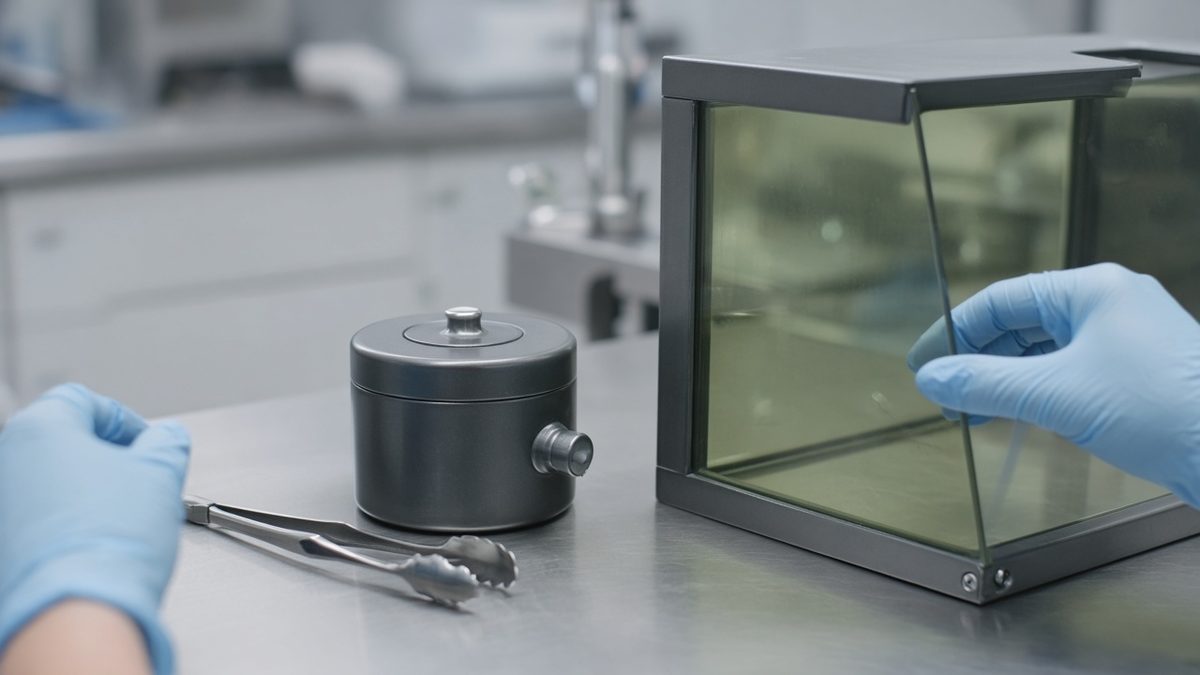
The HCPCS long descriptor is “Lutetium lu 177 vipivotide tetraxetan, therapeutic, 1 millicurie.” The unit is one millicurie, not one dose and not one vial.
The FDA label lists the recommended dose as 7.4 GBq (200 mCi) intravenously every 6 weeks for a total of 6 doses, or until disease progression or unacceptable toxicity. Pluvicto is supplied in a single-dose vial calibrated to 200 mCi ±10% at the time of administration. Bill the actual activity given, as documented in the administration record, which may be slightly above or below 200 mCi.
The Medicare MUE for A9607 is 216 units per day with an MAI of 3, and CMS lists the rationale as “Prescribing Information.” An MAI of 3 means the edit applies per day and is based on clinical benchmarks, so units above 216 would need strong documentation on appeal.
In the 2026 Medicare PFS (October update), 79101 has status A, a PC/TC indicator of 1, and a global period of XXX. That means:
The Medicare MUE for 79101 is 1 per day.
Pluvicto is indicated for PSMA-positive metastatic prostate cancer, so the primary diagnosis is typically C61, “Malignant neoplasm of prostate.” Add codes for the metastatic sites as documented in the record.
The current label (updated in 2026) lists two indications for adults with PSMA-positive disease:
The label also says to select patients using LOCAMETZ or another approved PSMA positron emission tomography (PET) product based on PSMA expression in tumors. Payers commonly ask for that PSMA PET report. Keep it with the claim documentation along with the treatment history that matches the indication you are using.
Medicare requires the JW or JZ modifier on separately payable drugs from single-dose containers. The CMS JW/JZ FAQ (January 1, 2025 version) says the policy applies to drugs with OPPS status indicator “G” or “K,” including radiopharmaceuticals, and to drugs with ASC payment indicator “K2.”
Noridian’s article on the JW and JZ modifiers (A53024) applies in JF, including Washington. It says that “Effective July 1, 2023, Medicare requires the JZ modifier on all claims for single-dose containers where there are no discarded amounts.” When part of a vial is discarded, report the administered amount on one line and the discarded amount on a second line with JW.
A9607 is not on the CMS list of HCPCS codes it uses as examples for the JW/JZ policy, but CMS says that list is not exhaustive. A9607 has OPPS status indicator K, and the Novartis billing guide also tells providers to report JW or JZ with A9607. Our recommendation is simple: add JZ when the full dose is given, and use JW on a second line if any activity is discarded and documented.
In the October 2026 OPPS Addendum B, A9607 has status indicator K (APC 9054) with a payment rate of $266.541 per unit. 79101 has status indicator S (APC 5661) with a payment rate of $238.39.
In the office, Medicare Part B pays A9607 from the MAC’s radiopharmaceutical fee schedule. Noridian JF’s list (last updated October 27, 2026) shows A9607 (“Pluvicto 1mci/ml”) at $291.66 per unit for the period Noridian lists as 1/7/26 through 6/30/26 (likely 1/1/26; confirm with Noridian) and $300.41 per unit effective July 1, 2026. Noridian notes that invoices can be used to establish fees, so keep the invoice for each dose on file.
At about 200 units per dose, the drug line is by far the largest dollar amount on the claim. A wrong unit count or a missing modifier can hold up a large payment.
We checked the Medicare Coverage Database for anything that governs Pluvicto in Washington:
Without an NCD or LCD, Medicare decides coverage under the general reasonable-and-necessary standard, and the FDA label is the main reference. Document the indication, the PSMA PET result, prior therapies, and the treatment plan for all six cycles.
Medicare Advantage and commercial plans often require prior authorization for Pluvicto. Some route radiopharmaceuticals through their medical drug programs instead of their radiation oncology vendor. Check each plan before the first cycle, and confirm whether the authorization covers all six doses or needs to be renewed.
CMS published the GLOBE Model final rule on October 2, 2026 (91 FR 62936), effective November 30, 2026. Many practices asked whether radiopharmaceuticals would be included. The answer is no. In the final rule, CMS confirms that:
> “separately payable radiopharmaceutical drugs and biological products that are not paid under section 1847A of the Act fall within an excluded product category for purposes of the Part B rebatable drug definition at 42 CFR 427.101(b)(4). As such, radiopharmaceutical drugs and biological products that are in this excluded product category would not satisfy the GLOBE Model inclusion criteria and therefore, would not be in the GLOBE Model.”
For Pluvicto billing, that means the GLOBE Model does not change how you code or get paid for A9607.
A Medicare patient with PSMA-positive metastatic castration-resistant prostate cancer receives cycle 3 of Pluvicto in a freestanding radiation oncology center in Washington. The administration record shows 198 mCi given, with nothing discarded.
If the same cycle were given in a hospital outpatient department, the radiation oncologist would bill 79101-26 only, and the hospital would bill the drug and the technical administration.
Bill one unit per millicurie actually given. A standard 200 mCi dose is 200 units. The Medicare MUE is 216 units per day.
No. We found no NCD and no Noridian JF LCD or billing article specific to Pluvicto or radiopharmaceutical therapy. Coverage is based on the FDA label and general Medicare rules.
We recommend it. A9607 isn’t on CMS’s example list, but the list is not exhaustive. The CMS FAQ applies the policy to SI K drugs, including radiopharmaceuticals. Noridian A53024 requires JZ for single-dose containers with no discard, and the Novartis billing guide says to report JZ/JW with A9607.
No. The final rule says separately payable radiopharmaceuticals (those not paid under section 1847A) are in an excluded product category and “would not be in the GLOBE Model.”
Pluvicto claims come down to three things: the right unit count on A9607, the right JW/JZ modifier, and the right 79101 split for the setting. In Noridian JF offices, keep the invoice and watch the fee schedule for updates. The GLOBE Model does not change any of this.
ALH Billing Solutions specializes in radiation oncology and also serves medical oncology, behavioral health and other specialties. We set up radiopharmaceutical charge capture, check units and modifiers before claims go out, track prior authorizations across all six cycles, and follow up on underpaid drug lines. Contact ALH Billing Solutions. Email info@alhbillingsolutions.com or call 360-836-1413.
Get practical medical billing insights delivered to your inbox.