
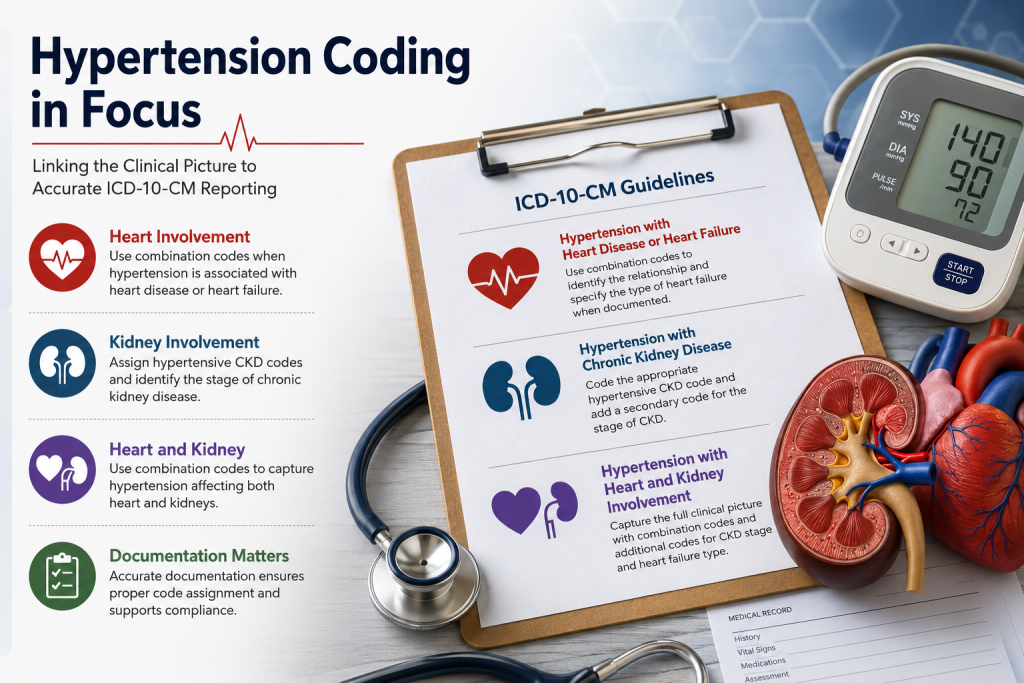
High blood pressure is one of the most commonly documented chronic conditions in healthcare. While assigning a diagnosis code for uncomplicated hypertension may seem straightforward, coding becomes more complex when the condition affects organs such as the heart and kidneys. Understanding how ICD-10-CM guidelines link these conditions is critical for accurate coding, compliance, and appropriate reimbursement.
Hypertension is more than elevated blood pressure readings. Over time, it can contribute to significant complications involving the cardiovascular and renal systems. ICD-10-CM recognizes these relationships and provides specific coding guidance when hypertension exists alongside heart disease, heart failure, or chronic kidney disease (CKD).
Accurate coding ensures that the patient’s overall health status is reflected in the medical record while supporting quality reporting, risk adjustment, and reimbursement.
When a provider documents primary hypertension without associated heart or kidney involvement, the diagnosis is reported with:
I10 – Essential (Primary) Hypertension
This code is assigned when no documented relationship exists between hypertension and other affected organ systems.
When hypertension and CKD are documented together, ICD-10-CM assumes a relationship between the two conditions unless the provider clearly states otherwise.
The coder should:
Examples may include:
Additional codes are required to identify the specific CKD stage.
When hypertension is associated with heart conditions such as heart failure, ICD-10-CM provides combination codes that capture both conditions.
Documentation should be reviewed carefully to determine:
An additional code is typically assigned to specify the exact type of heart failure documented by the provider.
Patients frequently have hypertension affecting multiple organ systems. In these cases, combination codes are used to capture:
Additional diagnosis codes are assigned to identify:
This approach paints a more complete clinical picture and supports accurate risk adjustment.
Although ICD-10-CM includes presumed relationships for certain hypertension-related conditions, provider documentation remains the foundation of correct code selection.
Coders should verify:
Clear documentation helps reduce claim denials, improves coding accuracy, and supports proper reimbursement.
As healthcare organizations continue focusing on quality reporting, risk adjustment, and value-based care, accurate hypertension coding plays a significant role in capturing the patient’s true clinical complexity.